
Newsletter Subscribe
Enter your email address below and subscribe to our newsletter

 ByJohn A
Acquiring inventory for an expanding apparel line, corporate merchandise program, or regional promotional event requires an analytical approach to product sourcing. Many procurement managers make the mistake of evaluating blanks based solely on catalog imagery, only to discover inconsistent sizing, scratchy interior fleece, or frail seam stitching once shipments land on the loading dock. Investing in proven Wholesale Sweatshirts provides your business with an adaptable, high-demand product category that commands retail value across seasonal collections and professional uniform programs.
Sourcing apparel through commercial wholesale supply lines allows brands to lower per-unit overhead and maintain production consistency. Taking time to inspect raw fiber blends, fabric weight metrics, inventory logistics, and brand tiering ensures that your custom apparel rollout builds long-term customer trust.
See also: What Makes Bitcoin Valuable?
The physical composition of a fleece garment dictates how it performs under industrial print dryers, embroidery hoops, and routine household laundering. Understanding the fundamental differences in fiber processing helps purchasing teams align garments with their chosen decorating methods.
Fabric weight is typically categorized in ounces per square yard or grams per square meter (GSM). Lightweight fleece offers comfortable indoor layering for transition seasons, while midweight and heavyweight options deliver the thermal insulation, structure, and drape that customers expect from premium outerwear.
Evaluating technical fabric specifications prior to issuing purchase orders ensures that your inventory matches customer expectations and intended workplace use cases.
The method used to spin raw cotton fibers determines the smoothness and longevity of the exterior fleece face. Inexpensive open-end spinning leaves exposed fiber tips across the yarn surface, creating a fuzzy, loose texture that pills easily under mechanical friction and catches on print screens.
Combed and ring-spun cotton processes filter out short, uneven fibers and twist the remaining long-staple strands into a dense, tight yarn structure. This refined construction provides an ultra-flat exterior surface that prevents ink bleeding, allowing screen printers to achieve clean registration and sharp graphic details.
A tightly knit cotton exterior also minimizes surface fibrillation, ensuring that cured prints remain bright and clear through dozens of wash cycles.
Commercial print shops running large-scale jobs under rigid deadlines frequently turn to proven industry classics. Sourcing a dependable workhorse like a Jerzees Sweatshirt provides production teams with consistent pill resistance, steady dimensional stability, and pre-shrunk fleece reliability across high-volume orders.
These time-tested garments feature high-density knit surfaces engineered specifically to minimize loose surface lint. Less lint on the fabric face keeps automated screen meshes clear, preventing ink clogs and reducing mid-run production stops.
Choosing proven blanks protects high-output print shops from unexpected registration shifts, keeping large corporate deliveries moving on schedule.
Managing apparel logistics requires planning based on realistic sizing curves. Guessing size splits without reviewing demographic habits routinely results in dead stock and missed fulfillment dates.
Structuring your bulk orders around established adult sizing patterns keeps capital working efficiently and ensures every team member receives a comfortable, well-fitting garment.
In typical corporate and promotional settings, demand clusters heavily around large and extra-large sizes rather than spreading evenly across the size chart. Purchasing an equal split of small, medium, large, and extra-large garments leads to shortages of popular sizes while excess outer sizes sit unused.
A reliable adult distribution curve allocates roughly ten percent to small, twenty-five percent to medium, thirty-five percent to large, twenty percent to extra-large, and ten percent to double extra-large.
Adjusting these ratios based on historical staff data helps procurement teams avoid dead inventory while ensuring that popular sizes remain available throughout active campaigns.
Always include a five to eight percent buffer across core sizes when placing volume orders. Departmental headcounts shift, on-site size trades happen during live distributions, and unexpected promotional opportunities arise throughout the business year.
Maintaining a small reserve of unprinted or decorated fleece saves companies from placing costly, rushed reorders that carry high machine setup fees and express shipping surcharges.
Organized inventory buffers keep fulfillment lines moving smoothly and maintain consistent outfitting standards for incoming team members.
A successful apparel program requires dependable blank sourcing and transparent freight tracking. Running out of critical inventory during a planned seasonal debut halts printing machines and compromises delivery deadlines.
Building relationships with verified commercial suppliers protects expanding enterprises from unexpected warehouse stockouts.
Apparel businesses and corporate procurement teams need supply partners who provide transparent warehouse stock counts and prompt freight dispatch. When suppliers face unexpected backorders, uniform rollouts stall and executive events are left without proper attire.
Partnering with established distributors like Simplstc Apparel gives brand managers and decorators dependable access to premium fleece blanks with matching dye lots and consistent sizing across cases. Sourcing blank inventory through dedicated commercial channels via simplstcapparel allows teams to plan corporate uniform programs around verified stock counts and clear freight schedules.
Maintaining a dependable supply pipeline gives your team the confidence to schedule large-scale corporate outfitting initiatives without worrying about inventory gaps or broken size curves.
Establishing an intake inspection routine when delivery cartons arrive protects your company from costly decorating errors. Once an embroidery needle pierces a garment or ink cures onto a panel, wholesale suppliers cannot accept it for exchange or credit.
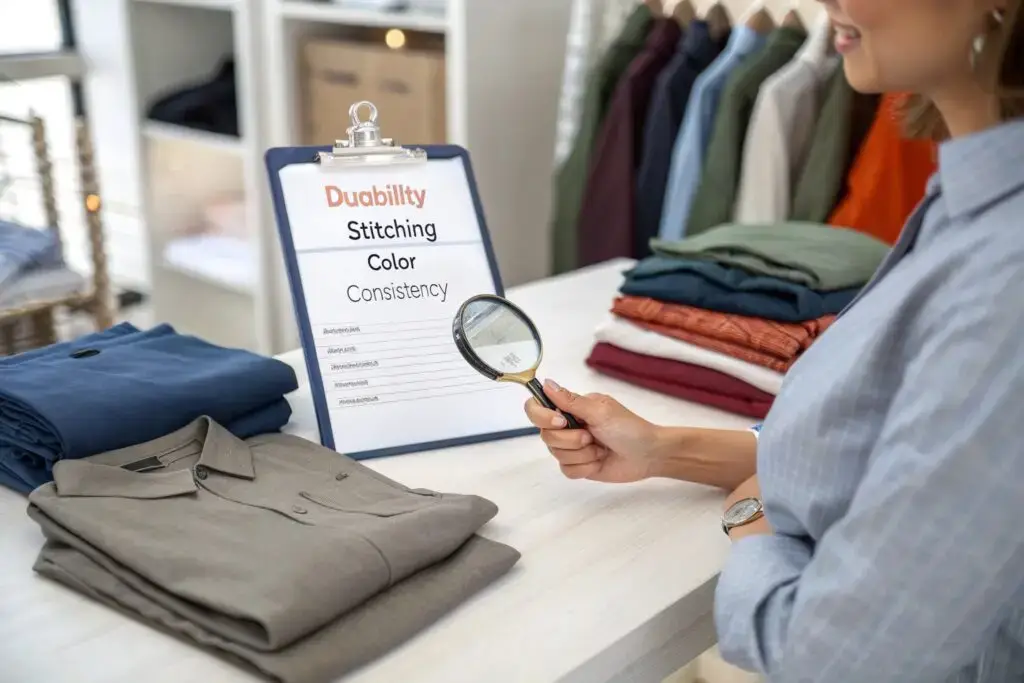
Open cartons upon arrival and verify piece counts and size splits against your purchase order before staging items for production. Pull random samples from each box to check neck ribbing, cuff seams, and shoulder stitching for loose threads or knitting flaws.
Taking the time to verify blank quality before production begins ensures smooth production runs and protects your total apparel investment.
Selecting the right decorating technique depends on how your audience will use the finished garment. Different methods interact with fleece knits in unique ways, affecting both the tactile feel and visual presentation of your artwork.
Balancing design scale with the physical properties of the fabric guarantees clean, long-lasting results.
Soft-hand plastisol inks mixed with curable reducers keep large chest graphics flexible and breathable, preventing heavy, armor-like ink deposits that feel stiff and trap body heat.
Water-based discharge inks offer an exceptional alternative on high-cotton fleece, chemically removing base fabric dyes and replacing them with vibrant pigments for a weightless, zero-hand feel.
Direct-to-film transfers provide high color vibrancy and sharp detail on both cotton and synthetic blends, allowing print shops to decorate small on-demand runs efficiently without complex screen setups.
Subtle design placements, such as a compact left-chest emblem paired with a small design on the wrist cuff or upper back neckline, deliver a refined retail look that wearers gladly wear outside work environments.
Wholesale apparel procurement provides the scale, cost savings, and manufacturing consistency needed to build a sustainable clothing line or corporate merchandise program. Bypassing retail markups lowers unit expenses, allowing organizations to deliver premium clothing that customers and employees appreciate.
Pairing durable blanks with professional decoration methods creates merchandise that holds its shape, color, and comfort through years of regular wear.
Investing in a well-managed wholesale fleece strategy ensures that your custom apparel arrives on schedule, fits your team comfortably, and represents your brand with authority across every setting.
